By our very own Head of Creative, Ross Hill
There are times that a creative spark strikes like lightning, splitting boardroom whiteboards in two and ending creative brainstorms early because, we-don’t-need-any-more-ideas-this-is-the-ONE.
In these moments ideas are in their simplest, purest, most undiluted form, and protecting and nurturing them can crystallise their power—allowing it to flow through development and into delivery. We have to be brave enough to trust that simplicity is not a weakness, but the source of their strength.
Every advertising campaign or marketing strategy begins with a single germination point. A starting stream that, in the right hands, becomes a river—spreading across physical and digital worlds, touching everything in its path. We are all witness to these huge campaigns. And it is true that even the most mundane creative concepts can be pushed to the masses with enough money, regardless of the ingenuity of their messaging.
But setting budget aside, there are campaigns that land simply because the idea itself is undeniable. When that happens, the hardest part isn’t finding the idea—it’s protecting it. Keeping it intact, resisting the urge to complicate it, and fighting the slow drift into safer, messier versions of what was once simple.
It is so easy for wonderfully simple ideas to become murky and confused, shaped by risk-averse clients or nervous creatives second-guessing themselves.
When you’ve got it, you’ve got it. And it takes care to keep it in a shape that feels true. Because at the heart of a great idea is something much simpler than creativity: truth. The best ideas are built on truth and how that truth resonates with people when they see it. If that truth really is true and not contrived or manufactured, the creative idea wrapped around it can go anywhere.
Example 1: Heinz
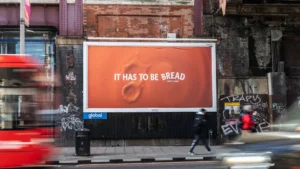
A well-known example of this is Wieden+Kennedy London’s “It Has to Be” campaign for Heinz. The executions are simple. Rich images of familiar food paired with the line, often shaped subtly into the iconic Heinz bottle silhouette, sometimes without showing the logo at all.
There are really two creative ideas at play here. Both are wonderfully simple, and both could have been used in entirely different campaigns on their own. The first is that Heinz products and branding are so ubiquitous that you don’t need a logo to advertise them. The second is that Heinz is so widely known and loved that the images and words alone are enough to conjure familiar, almost nostalgic memories.
Both of these ideas are true, but they work in slightly different ways. One appeals to recognition and logic. The other taps into emotion and memory. One goes for your head, the other goes for your heart.
Together, they create something that feels far more powerful and far deeper than the simplicity of the execution might suggest.
Example 2: PerfectDraft
A more narrative example comes from PerfectDraft, the home beer pump brand. At its core, the message is simple. You can have pub-quality beer at home. But instead of saying that outright, they found a story where that truth actually means something. It centres on Steve Wilson, who lives on Fair Isle, a remote island off Shetland with a population of around 50 people. There is no pub on the island, and if he wants one, it is a 120-mile round trip.
The film follows that reality. His life, the community, the journey. And then it flips it. Back home, pouring pints for friends, DJing in his house and recreating the thing he would otherwise have to travel for. It ends simply: Steve’s Croft. Fair Isle’s first pub. And only then do you see the brand.
Because this is not really about beer. It is about what the pub represents. Camaraderie, community, belonging. The product just happens to make that possible. And that is the difference.
Example 3: Childline
A third example comes from Childline’s Race to a Milli campaign, created with House of Oddities. The simple truth is that for many young people, being online is a constant source of pressure and anxiety, often feeling like a game you are competing in.
The campaign brings this to life through a mock gameshow, where two creators complete increasingly bizarre challenges in a race to one million likes. What they don’t know is that their scores are being manipulated, creating confusion, comparison and spiralling anxiety as they try to make sense of it.
The presentation is key. Bright, fast, highly stylised and coded in a way that feels native to Gen Z feeds, but with an underlying intensity that becomes uncomfortable. It mirrors the experience it is trying to highlight.
The reveal closes the loop, showing the manipulation and prompting reflection, allowing viewers to recognise those same patterns in their own lives.
It works because it doesn’t just explain the problem. It makes you feel it.
Conclusion
Across all of these, the pattern is the same. A clear, simple idea, built on something fundamentally true, and executed with enough confidence to let it speak for itself.
The format might change. The audience might change. The medium might vary. But the principle stays true.
The moment an idea starts to be over-explained or over-worked, it begins to lose the very thing that made it powerful in the first place.
The work that lasts does the opposite. It finds something true, keeps it simple, and commits to it fully.
A great creative idea does not need hundreds of nuanced layers. It shouldn’t need explaining either.
It just needs to be true, and executed with the conviction to leave it alone.